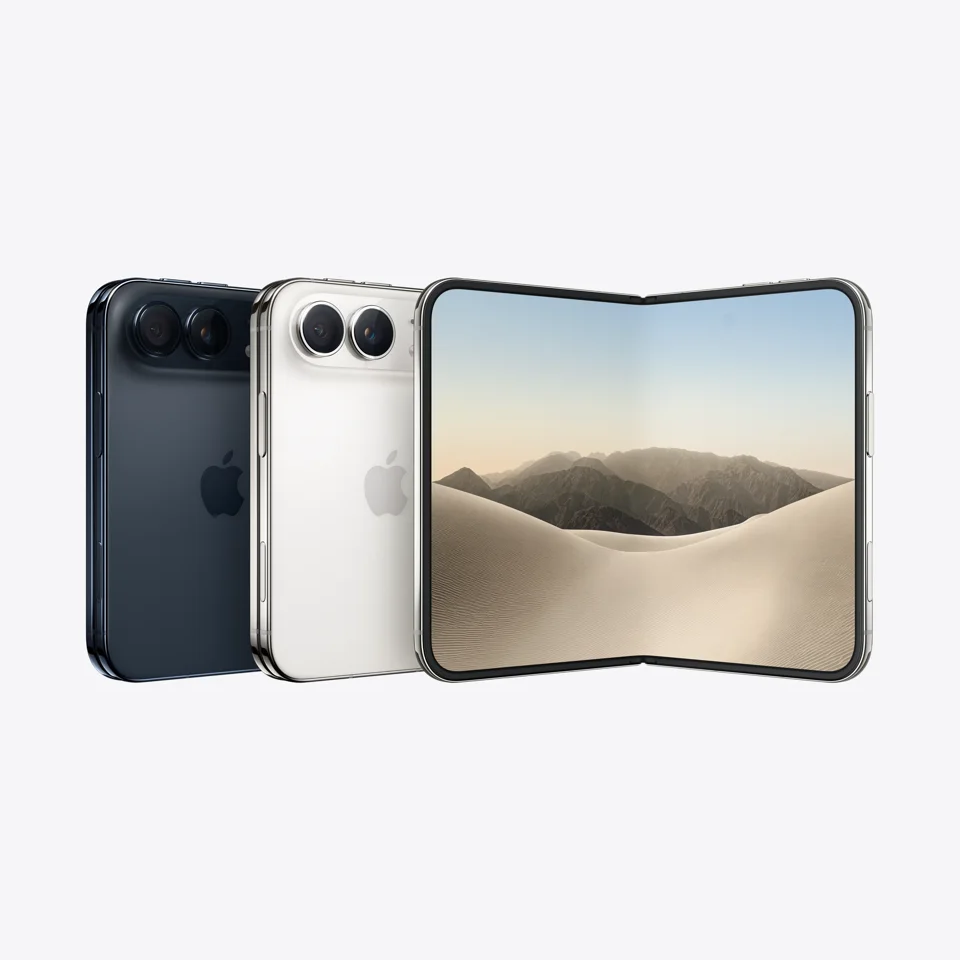
iPhone Duo Global Review Roundup: Pros, Cons, and Buyer's Guide
Following the October 23, 2026 launch of the iPhone Duo, we aggregate deep-dive reviews from The Verge, CNET, MKBHD, Joeman, Mediastorm, and Tom's Guide to examine hinge durability, nano-texture crease concealment, Touch ID trade-offs, and buying recommendations.
Bottom Line: Who Should Buy It and Who Should Wait?
Apple's first foldable smartphone, the iPhone Duo, officially launched on October 23, 2026. Across top global tech publications (The Verge, CNET, Tom's Guide, Wired, PetaPixel) and renowned YouTubers (MKBHD, Dave2D, Joanna Stern, Michael Fisher, Joeman, Mediastorm), a clear consensus has emerged:
"The iPhone Duo boasts the most refined hinge engineering and the best-disguised crease on the foldable market today; yet as a first-generation Apple hardware endeavor, it carries tangible physical and spec compromises."
- Recommended for: Tech enthusiasts with generous budgets who crave a pocketable iPad mini form factor for reading and split-screen multitasking, love hands-free desktop shooting, and are willing to embrace early-adopter software quirks.
- Recommended to wait: Photography buffs who demand a 5x optical telephoto lens and ProRAW, users with smaller hands sensitive to a 254g chassis, fans who cannot live without Face ID, or pragmatic iPhone users seeking maximum value and proven durability (iPhone 18 Pro Max remains the safer flagship choice).
1. Key Takeaways from Major Tech Outlets & Creators
| Reviewer / Outlet | Rating / Verdict | Core Takeaway |
|---|---|---|
| CNET | Editors' Choice | "Now I understand why Apple took its time. The passport-sized footprint is a joy to carry, and the anti-glare nano-texture inner screen plus IP68 rating removes the fragility anxiety of foldables." |
| MKBHD (Marques Brownlee) | 4 / 5 (First-Gen Fun) | "An iPad mini that fits in your pocket. Brilliant exterior hardware and fluid hinge animations, but the lack of Face ID and 254g heft are real trade-offs. Most people should wait for Gen 2." |
| The Verge | 8 / 10 | "A glimpse into the future of mobile devices with a sturdy hinge. However, third-party apps are stuck in a 'messy middle', and web browsing on the cover screen can feel cramped by banner popups." |
| Joeman | 4 / 5 | "The supercar of smartphones. The inner screen crease and protective film integration are arguably the best in the industry, though omitting telephoto and Face ID are obvious trade-offs." |
| Mediastorm (Tim) | 4 / 5 | "Survived 11,500 continuous folds (including extreme -20°C testing) and 37.8 kgf reverse bending force. Hardware is remarkably rigid, though heat concentrates on the right spine during 4K video." |
| 3cTim | 4 / 5 | "Seamless screen transitions and split-screen multitasking shine; but 254g feels heavy with a case, and eSIM-only configuration requires carrier attention." |
2. The Five Biggest Pros
- Class-Leading Crease Reduction & Matte Nano-Texture: The nano-texture coating scatters reflections and renders the middle fold virtually invisible when viewing the display head-on.
- Robust Titanium Hinge with Free-Stop Friction: The 100+ component titanium hinge offers smooth resistance at any angle between 30° and 150°, enduring tens of thousands of torture folds without loosening.
- True IP68 Dust and Water Resistance: While most competing book-style foldables stop at IP48, the Duo handles 6 meters of water submersion for 30 minutes, handling dust and beach trips with peace of mind.
- Fluid UI Transitions & Split-Screen Productivity: Opening the phone seamlessly expands ongoing tasks; Mail, Notes, and Calendar dynamically switch to iPad-like two-pane layouts with Split View and drag-and-drop.
- Versatile Folding Modes & Duo Preview: Half-folded "laptop mode" stands upright for hands-free video calls, while Duo Preview allows subjects to frame themselves using the 48MP main camera.
3. The Five Biggest Cons
- Heavy and Bulky Profile (254g / 11.3mm): When closed, the Duo is thick and heavy in pockets. Adding a protective case pushes the total weight past 280g.
- Touch ID Replaces Face ID: Due to ultra-thin display constraints, Apple omitted Face ID in favor of a side power-button fingerprint sensor, requiring deliberate finger contact (an Apple Watch helps mitigate this).
- No Telephoto Zoom or Pro Camera Formats: Lacks the 5x optical telephoto lens of the iPhone 18 Pro series, relying on digital crop, and omits ProRAW and ProRes capture modes.
- Third-Party Apps in a 'Messy Middle': Unoptimized third-party apps scale awkwardly or enforce black bars, and the split-screen multitasking is strictly locked to a 50:50 ratio.
- Staggering Price Tag ($1,999+ / NT$74,900+): Steep entry price combined with high display replacement costs makes AppleCare+ practically mandatory.
4. iPhone Duo vs. iPhone 18 Pro Max
| Feature | iPhone Duo | iPhone 18 Pro Max |
|---|---|---|
| Displays | 5.4-inch Cover + 7.6-inch Foldable Inner OLED | 6.9-inch Conventional Super Retina XDR |
| Weight | 254g (11.3mm folded) | 227g (8.25mm) |
| Biometrics | Side-button Touch ID | Dynamic Island Face ID |
| Cameras | Dual (48MP Main + 48MP Ultrawide) | Triple (48MP Main + Ultrawide + 5x Telephoto) |
| Pro Formats | Standard HEIF / JPEG / 4K60 Dolby Vision | ProRAW, ProRes, Log video recording |
| Multitasking | Split View, Apple Pencil support | Single app view, Picture-in-Picture |
| Starting Price | $1,999 / NT$74,900 | $1,199 / NT$44,900 |
5. Final Buying Advice
- Buy Now: If you want an all-in-one productivity powerhouse that replaces both an iPhone and an iPad mini, crave hands-free video creation, or love cutting-edge mobile hardware.
- Wait or Choose Pro Max: If camera zoom, lightweight portability, Face ID convenience, and long-term cost efficiency are your top priorities.